
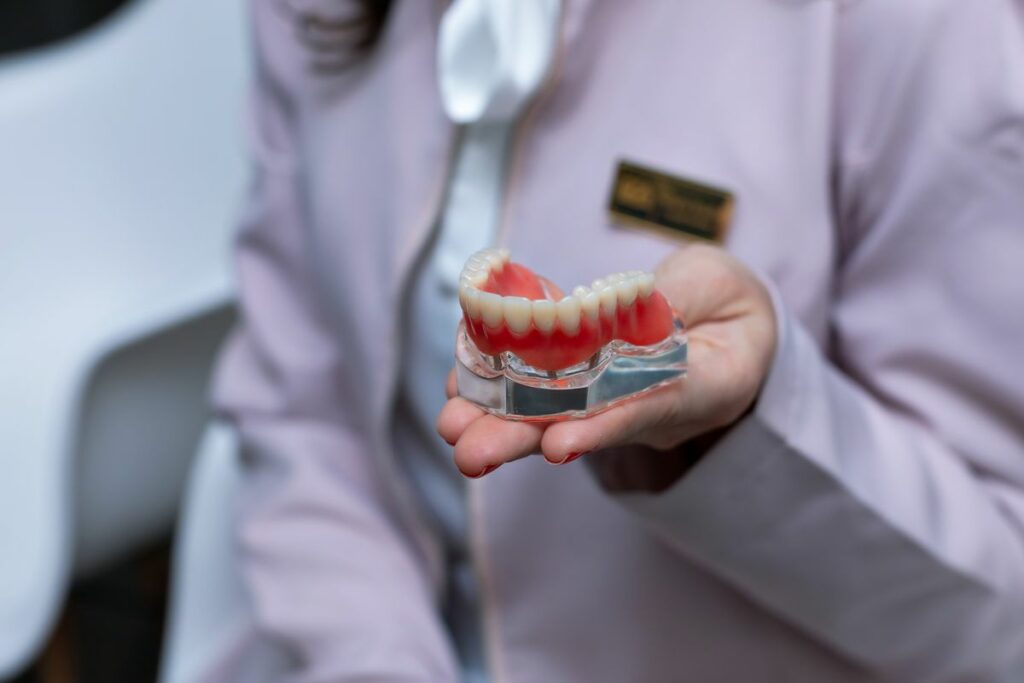
Here’s how to adjust to new dentures quickly:
Understand Initial Discomfort: New dentures can cause some discomfort. This is normal and means your mouth is just getting used to them.
Practice Patience and Persistence: Patience is key. Wear your dentures a little longer each day to help your mouth adjust.
Adapt to Speaking and Eating: Start with soft foods when eating and practice speaking to get comfortable with your dentures.
Maintain Proper Oral Hygiene: Keep your mouth and dentures clean to avoid problems.
Regular Dental Check-ups: Visit your dentist regularly to ensure your dentures fit well and work properly.
By following these steps, dentures will soon become a natural part of your daily life.
Understanding the Initial Discomfort
Adapting to New Dentures
Getting used to new dentures can be tough at first. Expect some soreness, extra saliva, and trouble speaking or eating. These are normal as your mouth adjusts. To ease discomfort, follow your dentist’s care tips closely, like using special rinses and adhesives. Regular check-ups ensure your dentures fit well. Be patient, and start with soft foods to make eating easier. Keep in touch with your dentist to quickly solve any issues, making the transition smoother.
Practicing Patience and Persistence
Adjusting to new dentures means establishing a consistent daily routine. By regularly including denture care and usage in your day, you help your mouth get used to them, which reduces discomfort. Patience and persistence are key to getting comfortable with your new dentures.
Start by cleaning your dentures daily. This keeps them in good shape and helps you get used to handling them. Wear your dentures every day to speed up the adjustment period. If they feel uncomfortable, give yourself time—it’s normal. Stay patient, and soon your dentures will feel like a natural part of your routine.
Developing a Routine
Having a daily routine helps you adjust to new dentures more easily. It’s all about making your dentures feel comfortable and work well for you. By developing predictable habits, you gain control and familiarity with your new dentures. Create a personalized routine that includes regular cleaning, proper storage, and set times for wearing them. This helps prevent irritation and keeps your mouth healthy. Being consistent with these habits will help you overcome any initial discomfort and build confidence. Plus, a structured approach lets you track your progress and make any necessary adjustments with your dentist’s help.
Embracing the Process
Adapting to new dentures requires patience and persistence. This process means getting used to changes in how your mouth feels and functions. It’s normal to experience some initial discomfort, speech difficulties, and changes in taste. Accepting this gradual adjustment can reduce anxiety and improve your experience.
Regular check-ups with your dentist are key. They can make necessary adjustments to ensure your dentures fit well and work properly. Stick to the care routines your dentist provides. This commitment helps you adjust and supports long-term oral health. Over time, you’ll incorporate dentures into your life confidently and comfortably.
Gradually Increasing Wear Time
When getting used to new dentures, increase wear time gradually. Start by wearing them for just a few hours a day. As you feel more comfortable, slowly add more time. This helps reduce discomfort and avoid irritation or sores. If you feel any discomfort, see your dentist right away. Keeping a daily log of how long you wear your dentures can help both you and your dentist make the right adjustments. By following this method, you’ll smoothly transition to wearing your dentures full-time, improving your oral health and function.
Mastering the Art of Speaking
Adapting to new dentures affects how clearly you speak. To improve, practice speaking each day. This helps you get used to how your mouth feels now. Speaking slowly can also make it easier at first. Try tongue exercises to strengthen control over your speech muscles. These simple steps can make your speech clearer and boost your confidence when talking.
Practice Pronunciation Daily
Practice speaking daily with your new dentures for better communication. This means saying tricky words out loud, which helps your mouth get used to its new shape. By doing this regularly, you’ll find talking becomes easier, and you’ll feel more confident in conversations. You might also try speech exercises or work with a speech therapist for extra help. Adding these practices to your daily routine can really boost your speaking skills, making social and work interactions smoother and more effective.
Slow Down Speech
Speak Slowly for Clear Communication
When getting used to new dentures, speaking slowly helps you communicate more clearly. Slowing down gives your tongue and lips time to work with the dentures, making speech easier. This careful pacing reduces discomfort and keeps dentures from moving around. Focus on saying each word clearly, which helps you avoid slurring and boosts your confidence in conversations. This method also lets your mouth muscles adapt to the dentures over time. To check your progress, practice speaking slowly in front of a mirror or record yourself for feedback.
Use Tongue Exercises
Tongue exercises can help new denture wearers adapt to their prosthetics by improving speech. These exercises boost tongue coordination and mobility, essential for speaking clearly with dentures.
- Tongue Stretches: Stick your tongue out towards your nose and then down to your chin. This builds flexibility and strength, helping with control.
- Side-to-Side Movements: Move your tongue from one side of your mouth to the other. This improves lateral coordination, crucial for certain sounds.
- Press and Release: Press your tongue against the roof of your mouth, then let go. This increases the tongue’s range of motion and strength for clearer speech.
Adapting to Eating With Dentures
Eating with dentures takes some getting used to, but with patience and practice, you can achieve comfort and ease. Start by chewing on both sides of your mouth to keep the dentures in place. Cut your food into small pieces, which makes chewing easier. Begin with softer foods and gradually try tougher textures as you get more comfortable.
Try different foods to find what works best with your dentures. Avoid sticky or hard foods at first, as they might make your dentures unstable. Remember, persistence and adaptability are key to mastering eating with dentures. Enjoy your meals with confidence!
Maintaining Proper Oral Hygiene
Keeping your dentures clean is key to good oral hygiene. Here’s how to do it right:
- Clean Daily: Use a soft-bristled brush designed for dentures. This helps remove food particles and plaque without scratching them.
- Soak Dentures Overnight: Soak them in a denture-cleaning solution to kill bacteria that brushing might miss.
- Maintain Oral Hygiene: Brush your gums and tongue with a soft brush to improve circulation and remove debris.
Managing Soreness and Irritation
Taking care of soreness and irritation is key for anyone new to wearing dentures. When you first get dentures, your gums might feel swollen, or you might notice tender spots due to pressure. To help with this, rinse your mouth with a saltwater solution to ease swelling and support healing. Over-the-counter pain relievers can also help reduce discomfort.
Check your gums often for any ongoing soreness. If it doesn’t go away, your dentures might need adjusting by a dental professional. Use a soft-bristle toothbrush to clean your gums gently, which helps avoid more irritation. Regular dental check-ups ensure your dentures fit well and prevent further issues.
Utilizing Denture Adhesives Wisely
Clean and Dry Dentures First Start with clean and dry dentures for the best results. This step is crucial because it helps the adhesive work effectively, giving you more comfort and stability.
Use Adhesive Sparingly Apply a small amount of adhesive. Place tiny strips or dots where your dentures need the most support. Using too much can cause discomfort or messy overflow.
Secure Your Dentures Once the adhesive is on, press your dentures firmly into place. Hold them briefly so the adhesive can set properly.
These simple steps will help your dentures fit better and stay secure, making your experience more comfortable.
Scheduling Regular Dental Check-Ups
Regular dental check-ups are essential for anyone with new dentures. These visits help catch any problems early, like discomfort or pressure points, and ensure dentures fit well. Regular adjustments prevent sores and irritation, making dentures more comfortable. Dentists also clean dentures thoroughly, reducing infection risk, and teach denture-specific oral care tips. Sticking to a consistent check-up schedule helps you get used to your dentures and keeps them lasting longer. By visiting your dentist regularly, you ensure your dentures stay in great shape and your mouth stays healthy.
Frequently Asked Questions
How Long Do Dentures Typically Last Before Needing Replacement?
Dentures typically last between 5 to 10 years. This lifespan depends on how well you take care of them. Regular dental check-ups and following care instructions can help keep your dentures in good shape. This means they will fit better, work well, and make you happier with your smile.
To make your dentures last, clean them daily, avoid harsh cleaners, and handle them with care. Also, visit your dentist regularly to check for any issues. By doing this, you ensure your dentures remain comfortable and functional, helping maintain your oral health.
Can Dentures Affect My Sense of Taste?
Yes, dentures can change how you taste food. This happens because dentures cover the roof of your mouth, which can affect how your taste buds work. Some people find that their sense of taste becomes more sensitive, while others notice a change in how flavors are perceived.
The impact on taste varies from person to person. It often depends on how well the dentures fit and how quickly you adapt to wearing them. If you’re experiencing taste changes with your dentures, it might be worth discussing with your dentist to find a comfortable solution.
Are There Dietary Restrictions With Dentures?
When you switch to dentures, start by eating soft foods like mashed potatoes or yogurt to reduce discomfort. Proper denture cleaning is crucial to keep your mouth healthy and avoid infections or irritation.
Eating Soft Foods with Dentures: Begin with soft foods to ease into wearing dentures. This means choosing options like mashed potatoes, yogurt, or scrambled eggs, which are gentle on your gums.
Cleaning Your Dentures: Cleaning your dentures well is key to oral health. Make sure to brush them daily and soak them overnight in a special solution to prevent bacteria build-up and irritation.
Is It Safe to Sleep With Dentures In?
It’s generally not safe to sleep with dentures in. Removing your dentures at night is important for maintaining good oral health. When you take them out, it reduces bacteria buildup and gives your mouth a chance to rest. This practice helps keep your gums healthy and your smile fresh.
To care for your dentures, clean them thoroughly and store them in a safe place overnight. This routine means fewer germs in your mouth and better overall dental hygiene. Keep your dentures clean and your mouth happy by following this simple nightly habit.
How Do I Handle a Denture-Related Allergic Reaction?
To handle a denture-related allergic reaction, first remove the dentures to reduce irritation. This helps alleviate discomfort and swelling. Next, consider taking an antihistamine to manage any allergic symptoms. It’s important to consult a dental professional for further advice and treatment options.
Managing the reaction means focusing on comfort and safety. Address any swelling or discomfort promptly and ensure you’re following any guidance from your dentist. This approach will help keep you comfortable and safe while addressing the issue effectively.