
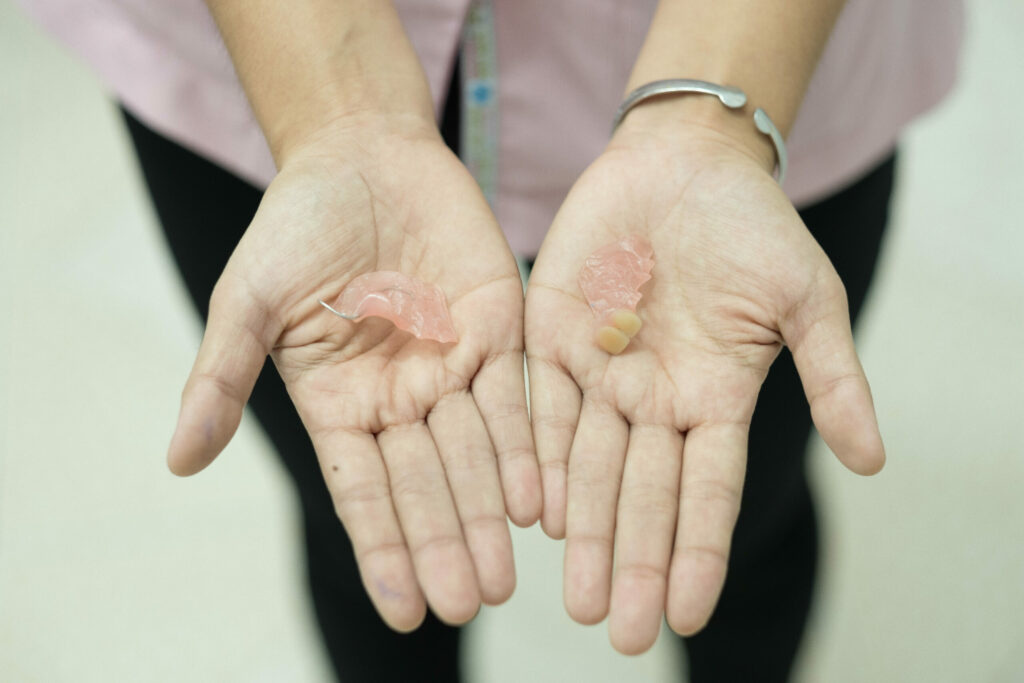
Assess the Damage Quickly
If your dentures break, first figure out how bad it is. A small crack might just need a quick fix, but a complete break could mean more work.
Keep a Repair Kit Handy
Having a denture repair kit at home can be a lifesaver. It has the right tools for a temporary fix until you see a dental professional.
Clean Them Carefully
Before you do anything, make sure your dentures are clean to avoid more problems.
Avoid Super Glue
Don’t use super glue; it can permanently damage your dentures.
Temporary Comfort
Taking these steps can make you more comfortable until you get professional help.
Assess the Damage
To assess damage to broken dentures, start by carefully looking at the break to understand what’s wrong. Check if it’s a small crack or a full break. Pay attention to where it’s broken—like on the base, tooth, or clasp—because this affects how it can be fixed. Use good lighting and a magnifying glass if needed to spot tiny cracks. Know what the dentures are made of, like acrylic or ceramic, as this affects repair options. Take notes and photos to share with dental technicians for a precise repair. This thorough approach helps in understanding the denture’s condition.
Gather Essential Supplies
Gathering essential supplies is key to fixing broken dentures in an emergency. You’ll need a denture repair kit, which includes the adhesive and bonding agents needed for temporary fixes. Safe storage solutions, like a clean, padded case or a specialized denture container, are also important to prevent further damage. Having these items ready ensures you can manage the situation effectively until you see a dentist. This approach helps protect your dentures and keeps them usable until professional help is available.
Temporary Repair Materials
Have broken dentures? Temporary repair materials can help. Denture repair kits from pharmacies offer quick fixes using special glue to hold broken pieces together. These kits usually have adhesives that work well with denture surfaces, providing a reliable short-term fix. For sharp edges, orthodontic wax can prevent cuts and discomfort. If there are small cracks, dental-grade resin can keep things intact. Remember, these solutions are just temporary and not a replacement for a dentist’s help. Always follow the instructions to avoid more damage. Prioritize professional care for long-lasting results.
Safe Storage Solutions
Keep Your Broken Dentures Safe
To prevent further damage to broken dentures, storing them properly is crucial. Use a denture storage container that is both durable and waterproof. This protects the dentures from impacts and moisture, which can worsen cracks.
Before storing, clean your dentures with a denture cleaning solution. This removes debris and prevents bacteria from growing while they’re stored.
Clean the Dentures Carefully
If your dentures break, start by rinsing them with cold water. This helps remove debris and prevents more damage. Use a soft toothbrush to gently clean the dentures, ensuring you don’t make any cracks or misalignments worse. This careful cleaning keeps your dentures sturdy and ready for a temporary fix or a check by a dental professional. Always handle them with care to maintain their structure. For best results, follow these steps each time they need attention, ensuring your dentures remain in good condition and comfortable to use.
Rinse With Cold Water
Rinse with Cold Water
To care for broken dentures, start by rinsing them with cold water. This helps clean off any debris without harming the denture. Cold water is gentle and won’t warp the dentures like hot water might. To ease mouth swelling, you can also use an ice pack. Soaking dentures in cold water can soothe your gums, making you more comfortable. This step also helps reduce bacteria on the dentures. Proper rinsing is key for keeping your dentures clean and ready for repair.
Use Soft Brush Gently
Use a soft-bristled toothbrush to clean broken dentures. This prevents further damage by being gentle on existing fractures. Always use lukewarm water—hot or cold can harm the denture material. Gently scrub to remove debris and plaque without causing more harm. Let dentures air dry completely after cleaning. Once dry, apply denture adhesive to temporarily stabilize them until you can see a dentist. This ensures your dentures stay functional and clean, keeping your oral health in check during emergencies.
Use a Denture Repair Kit
Fixing dentures with a repair kit can be a quick temporary solution when they get damaged. These kits help you make short-term repairs using materials like acrylic resin and denture adhesive to reattach broken parts or loose teeth. Start by cleaning the broken area, apply the adhesive, and let it cure to ensure a stable hold. Always follow the instructions carefully to avoid making the damage worse. This way, you can keep your dentures working well and stay comfortable until you can see a dentist for a proper repair.
Avoid Using Super Glue
Avoid Using Super Glue on Dentures
Super glue is not suitable for fixing broken dentures. Its chemical makeup can cause harm rather than help. The glue creates a stiff bond, which might lead to cracks in the denture material because it can’t flex like your dentures need to. Too much glue can also seep into the wrong areas, messing up the fit. Plus, the fumes are toxic and unsafe if inhaled or swallowed. For a safe fix, it’s best to visit a dental professional or use a denture repair kit designed for emergencies.
Modify Your Diet Temporarily
If your dentures break, temporarily changing your diet is wise to avoid further damage and discomfort. Eating soft foods puts less stress on your mouth and helps prevent worsening the problem. Consider options like mashed potatoes, yogurt, and scrambled eggs, which are easy to eat without much chewing. Liquefied meals like smoothies and pureed soups are also great, providing nutrition without needing to chew hard. Avoid hard foods like nuts and raw vegetables, as they can strain broken dentures. Adjusting your diet is a short-term fix until you can see a dentist.
Practice Caution While Speaking
Managing broken dentures requires careful speech adjustments to avoid discomfort and ensure clear communication.
- Speak Slowly: Talking at a slower pace helps control denture movement, reducing irritation or damage risks.
- Clear Enunciation: Pronouncing each syllable clearly helps avoid misunderstandings, even when oral stability is compromised.
- Use Simple Words: Keeping language simple prevents extra strain on your dentures.
- Regular Pauses: Pause often to discreetly adjust your dentures if needed.
These tips make speaking with broken dentures less stressful, ensuring a more comfortable experience.
Schedule an Appointment With Your Dentist
Book a Dentist Appointment Quickly
Scheduling a quick appointment with your dentist is crucial when dealing with broken dentures. Acting fast means you can avoid complications and get the help you need right away. Contact a denture specialist as soon as you notice any damage. They have the skills and equipment to assess the situation and fix your dentures. Quick action can prevent further damage and help restore your dentures’ function. Sometimes, they can offer temporary fixes during your first visit to ease discomfort until a full repair is done. Prioritizing this step ensures the best outcome for denture emergencies.
Prepare for Future Emergencies
Be Ready for Denture Emergencies
Emergencies happen, but being ready can make a big difference, especially with dentures. Having a plan helps you handle unexpected denture issues smoothly.
- Build an Emergency Kit: Pack items like temporary adhesive, repair tools, and a storage case to tackle immediate problems.
- Save Important Contacts: Keep your dentist’s phone number handy for quick access when needed.
- Regular Check-Ups Matter: Routine visits to your dentist can catch potential denture issues early on.
- Learn Basic Repairs: Knowing simple denture repair steps can help you fix minor problems yourself.
These steps will help you stay prepared and ensure your dentures are always in good shape.
Frequently Asked Questions
Can Broken Dentures Cause Health Issues if Not Repaired Promptly?
Broken dentures can cause health issues if not fixed quickly. They increase the risk of infections by exposing your mouth to bacteria and can also lead to nutritional problems. When your dentures are broken, it’s hard to chew food properly, which means your body might not get the nutrients it needs. This can affect both your oral and overall health. To avoid these problems, it’s important to repair broken dentures as soon as possible. Taking care of your dentures helps keep your mouth healthy and ensures you can enjoy your meals without any issues.
What Are the Signs That Dentures Need Professional Repair?
Here are signs that your dentures may need professional repair:
- Poor Fit: If your dentures don’t fit well, it means they need adjusting. A loose or tight fit can lead to discomfort.
- Persistent Discomfort: Constant pain or irritation while wearing dentures indicates they need attention.
- Visible Damage: Cracks or fractures in dentures are clear signs they require repair.
- Chewing Problems: Difficulty chewing with your dentures can result in jaw discomfort or nutritional issues.
- Mouth Sore Spots: Sore spots in your mouth mean your dentures are causing irritation.
Addressing these issues quickly helps maintain good oral health and prevents further problems.
How Can I Prevent My Dentures From Breaking in the Future?
To keep your dentures from breaking, focus on proper care and regular check-ups. Clean your dentures daily to prevent damage from food particles or bacteria. Store them in water or a denture solution when not in use to maintain their shape. Visit your dentist routinely for adjustments and to assess any wear and tear. Stick to a denture replacement schedule to avoid weaknesses that can lead to breaks. By following these steps, you can ensure your dentures remain strong and functional for longer.
Are There Temporary Solutions if a Repair Kit Is Unavailable?
If you don’t have a repair kit for your dentures, you can use temporary solutions like dental wax or sugar-free gum. These items can help secure your dentures temporarily until you can see a dentist.
Using dental wax or sugar-free gum means you get immediate comfort and stability. These makeshift adhesives are easy to find and use, offering a quick fix in a pinch. Remember, these are just temporary solutions, and you should seek professional dental help as soon as possible for a proper repair.
These tips are helpful when you’re in a bind, ensuring your dentures stay in place without causing discomfort.
What Should I Do if My Dentures Break While Traveling?
If your dentures break while traveling, find emergency dental services right away. Checking your travel insurance might help cover urgent repair costs. Be sure to document the incident carefully and contact your insurance provider as soon as possible. This approach ensures a smoother claims process if you face an unexpected dental emergency.